


Your phone starts charging the moment you plug it in overseas. The hair dryer is usually the one that causes trouble.
It's a common surprise for international travellers. One device works exactly as it does at home, while another overheats, refuses to turn on, or simply isn't safe to use. The difference comes down to how those devices are built and the type of electricity they're designed to handle.
Knowing the difference before you travel can save you from damaged appliances and unnecessary purchases. With the right Ceptics universal travel adapter or travel voltage converter, it's much easier to pack only what you actually need.
The Difference Between Electronics and Heating Appliances
Phone, tablet, and laptop chargers convert incoming power into the lower voltage the device needs to operate.
A hair dryer uses electricity to generate heat, which means it draws far more power than a phone charger and is much more sensitive to the voltage coming from the wall outlet.
Why Most Phone Chargers Work Anywhere in the World
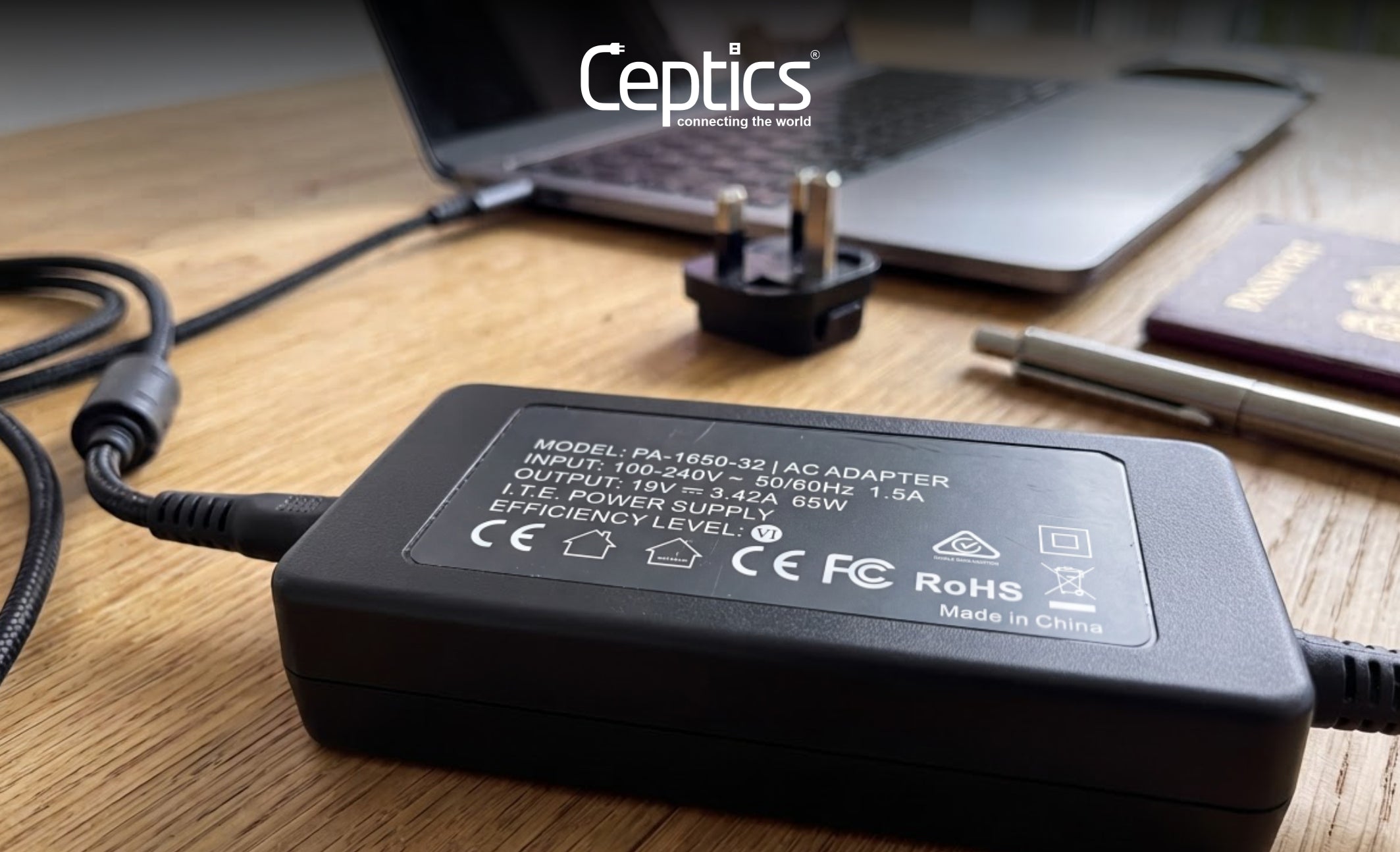
Take a look at your phone charger and you'll probably find a line that reads Input: 100–240V, 50/60Hz.
That small line tells you the charger is designed to accept the voltages used in most countries around the world. Modern USB chargers and many USB-C laptop chargers adjust automatically, so they don't need a converter when you travel.
In most cases, the only thing you'll need is a lightning or type C travel adapter that matches the outlets at your destination.
Why Many Hair Dryers Don't Work Internationally
Many hair dryers are built for one voltage only, often either 120V or 220–240V. Plugging a 120V hair dryer straight into a 220V outlet will lead to overheating, permanent damage, or a blown fuse within seconds.
That's where many travellers get caught out. A plug adapter changes the shape of the plug, but it doesn't change the electricity coming from the wall. A hair dryer voltage converter or international voltage converter may still be needed if the appliance isn't designed for dual-voltage operation.
How to Check If Your Hair Dryer Is Dual Voltage

The answer is usually printed on the appliance itself. Look for the label near the handle or where the power cord enters the hair dryer. If it says 100–240V, you've got a dual voltage hair dryer for international travel, and you'll only need the right plug adapter.
If the label lists just one voltage, such as 120V, you'll need to think a little differently before packing it. That's when a travel voltage converter or 220V to 110V voltage converter may be required, depending on where you're travelling.
Adapter vs. Converter: What Do You Actually Need?

This is where a lot of travel confusion starts.
A plug adapter changes the shape of your plug so it fits a different outlet. It doesn't change the electricity coming from the wall.
A voltage converter does. If you're travelling with a single-voltage hair dryer, that's the device that makes the difference. Understanding the difference between an adapter and converter helps you avoid buying something that only solves half the problem.
For example, a Ceptics travel voltage converter like the VC-S2000 is designed to help travellers safely use compatible 110V hair dryers in countries that supply 220–240V power.
Common Travel Mistakes to Avoid
A quick look at the label before you pack can save a lot of frustration later.
One common mistake is assuming every electronic device handles foreign voltage the same way. Another is packing only a plug adapter without checking whether the appliance also needs voltage conversion.
Hair dryers deserve extra attention because of their higher power requirements. Using the wrong converter or skipping it altogether can damage the appliance before you've even finished getting ready.
Best Travel Solutions for Hair Styling Devices
If you travel regularly, a dual voltage hair dryer for international travel is usually the simplest option. It removes the need for converters, leaving you with only the correct plug adapter to pack.
If your current hair dryer only supports one voltage, bringing the right dual voltage converter or international voltage converter becomes important. Some travellers also opt to use in-house dryers when they're available, especially on shorter trips.
Lastly, packing the right Ceptics universal travel adapter or voltage converter before you leave is much easier than trying to find one after you arrive.
Charge Worldwide with Ceptics
Your phone charger and your hair dryer may sit side by side in the same suitcase, but they aren't built to handle electricity in the same way.
Checking the voltage label before you travel takes only a few seconds. With Ceptics travel adapters and voltage converters, it's easier to stay powered safely wherever your travels take you.