


You arrive in another country. You plug in your laptop charger. But you realize it doesn’t fit because the plug type is different. And other times, the voltage is higher than what your device expects. That’s when you realize that power outlets are simple, until they stop cooperating.
These small details come from a long history of electrical development that happened separately across different regions. As electricity spread, countries created their own plug types, safety standards, and power systems. Over time, those choices produced the many plug types that we deal with today. Practical tools like a Ceptics travel plug adapter (universal option) make it easier to handle those differences without having to carry multiple adapters every time. .
The Early Days of Electricity and Plug Design
Electricity spread rapidly in the late nineteenth century. Cities, factories, and homes began installing electrical systems with little coordination between other countries, so each created plugs and sockets suited to its own infrastructure.
Early designs were simple and experimental. Some lacked grounding, some had minimal insulation. The only priority was delivering electricity reliably. And because these systems developed independently, different plug designs appeared across regions.
How Voltage and Frequency Influenced Plug Types
Voltage differences played a major role in shaping plug design. The 110–120 voltage system was considered safer during the early rollout of household electricity. But later, other regions adopted 220–240 volts, which allows electricity to travel more efficiently and support higher-power appliances. Lower-voltage networks use higher current, while higher-voltage systems deliver the same power with lower current but require stronger insulation and stricter safety measures.
These voltage differences influenced plug construction over time. Grounding pins, prong thickness, and socket design all adapted to handle electrical load and improve safety.
Regional Plug Standards and Their Origins
Different regions gradually settled into their own standards. North America developed the Type A and Type B plugs.
Many European countries adopted variations of the Type C design. France and Belgium introduced Type E sockets with grounding pins, while Germany’s Type F design added grounding clips along the sides.
The United Kingdom took a very different approach. The Type G plug includes three rectangular pins with built-in fuses for protection, and is often considered one of the safest plug systems currently in use.
Safety Innovations That Shaped Modern Plugs
Electrical safety improved significantly throughout the twentieth century. Grounding pins were introduced to prevent electric shock when faults occurred. Insulated prongs reduced the risk of accidental contact while inserting plugs. Child-safety features such as shutter systems were also introduced to prevent children from inserting objects into sockets.
Each new safety regulation influenced plug design within that country’s electrical system. Over time, these improvements made modern plugs far safer than their early counterparts, but they also reinforced regional differences rather than creating a single universal design.
Why Global Standardization Never Happened
It sounds simple in theory. If there weren't so many plug types around the world, travelers would never need adapters. But the reality is much messier.
By the time electricity became common in homes, many regions had already committed to their own plug designs and voltage systems. Once millions of buildings are wired around a specific outlet type, changing it becomes near impossible. Additionally, governments regulate electrical safety differently. Each country built standards that matched its infrastructure, engineering practices, and safety priorities.
What This Means for Modern Travelers

Anyone traveling internationally eventually runs into this scenario: a charger that works perfectly in their home won’t even fit into another country’s outlet.
Understanding your destination’s plug type helps avoid surprises, especially when working abroad or relying on devices throughout the day. Many travelers now carry a universal electric plug adaptor so they can stop worrying about compatibility.
How Ceptics Bridges the Global Plug Gap
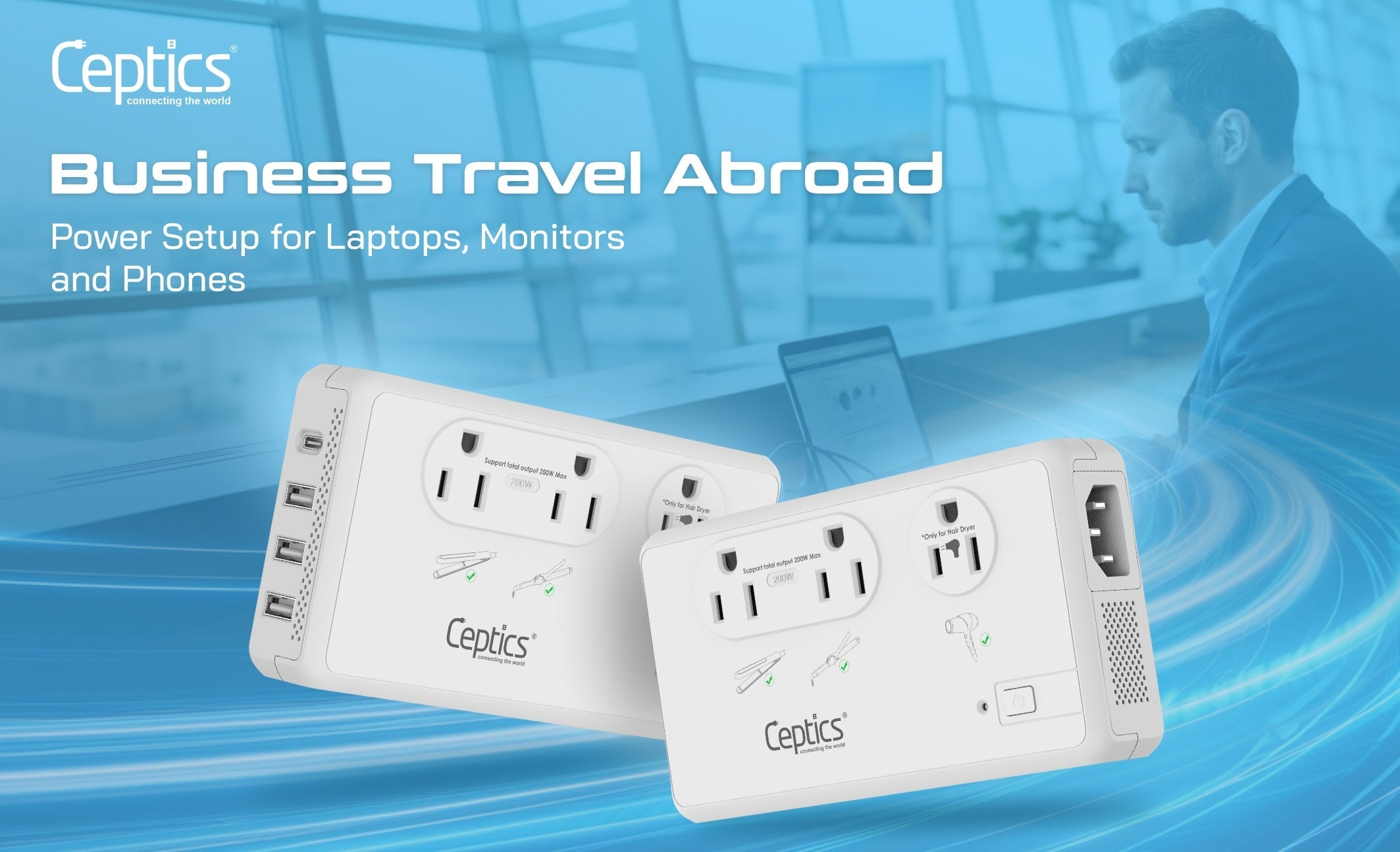
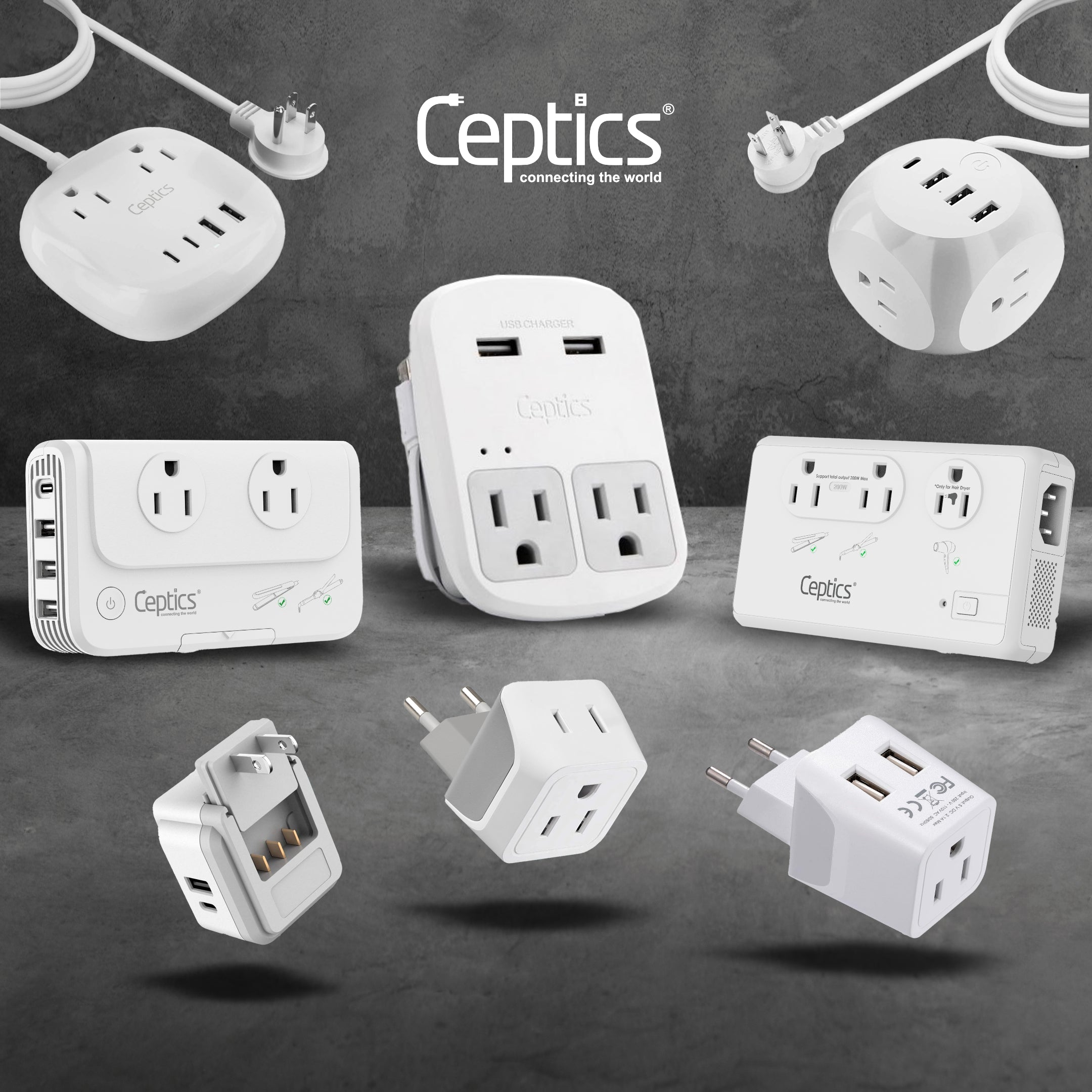
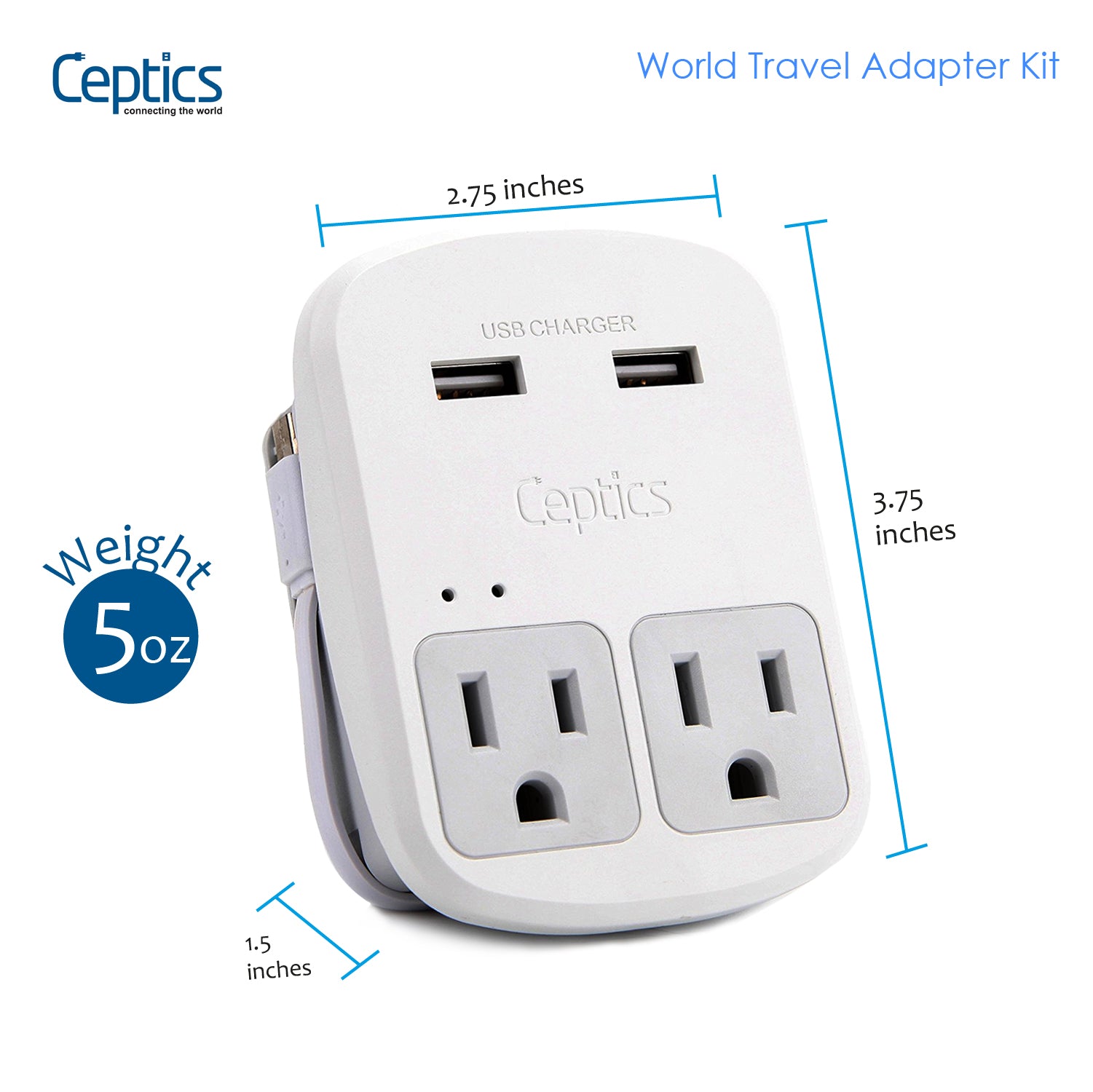
The variety of plug types around the world is exactly why products like a universal electric plug adaptor exist. Instead of carrying multiple adapters, travelers can rely on one compact solution designed to work across many regions.
Ceptics’ travel adapters are built to accommodate multiple plug configurations while maintaining a secure connection. For devices that are not dual voltage, a Ceptics voltage converter for travel helps regulate power safely when moving between different voltage systems.
Together, these solutions make moving between countries more seamless.
Dealing with Plug Types Around The World using Ceptics
Plug types around the world are different, and there’s almost nothing we can do about it. But understanding the differences helps travelers prepare before leaving home.
Having a reliable adapter and voltage converter for moving between countries makes everything easier. Travel smarter with Ceptics adapters—built for a global world.